
Outcome Harvesting at Scale: Lessons from Evaluating a Global Education Programme
Authors: Awuor Ponge and Noor Muhammad
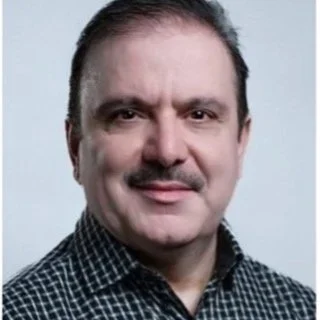
Noor Muhammad Ansari
Noor Muhammad Ansari is Director of Monitoring and Evaluation at the Educate A Child (EAC) programme of the Education Above All Foundation in Qatar, where he leads the design and implementation of global monitoring, evaluation, and learning systems for multi-country education initiatives. With over two decades of experience in international development, his work focuses on evaluation methods, data systems, and evidence generation to strengthen education systems and expand opportunities for out-of-school children. He has contributed to global research and knowledge products on education policy, system transformation, and evidence-informed decision-making, and has presented work on large-scale programme evaluation in international forums.

Awuor Ponge
Dr. Ponge, is a Senior Associate Fellow, in-charge of Research, Policy and Evaluation at the African Policy Centre (APC). He is the immediate former Vice-President of the African Evaluation Association (AfrEA). He holds a Doctor of Philosophy (PhD) Degree in Gender and Development Studies. Ponge is an Adjunct Faculty at the Jaramogi Oginga Odinga University of Science and Technology (JOOUST), Kenya, where he teaches Development and Policy Studies. He has extensive international experience in program planning, monitoring and evaluation, using innovative emerging participatory methodologies and approaches including Outcome Harvesting and Most Significant Change (MSC) among others.
Evaluating complex development programmes is challenging, especially when change unfolds across many countries, through multiple partners and over long periods. Traditional evaluation approaches often struggle to capture this complexity. Outcome Harvesting (OH) offers a useful alternative by identifying observable changes and examining how programmes contributed to them.
But what happens when Outcome Harvesting itself must be applied at scale?
The Evaluation of a Decade of Educate A Child (EAC) Impact (2012–2022) provides one example. Implemented by the Education Above All (EAA) Foundation, the programme spans more than 55 countries, 88 projects, and 45 implementing partners, all working toward a shared goal: enrolling and retaining out-of-school children in primary education. Conducting an OH evaluation across such a large and diverse portfolio presented several methodological and practical challenges.
Below are a few lessons from that experience.
Managing scale and diversity
Multi-country outcome harvesting must deal with both scale and contextual diversity. EAC projects operate in fragile states, refugee contexts, remote rural communities and dense urban areas. Each project addresses different barriers to education, including poverty, gender discrimination, displacement, disability and weak infrastructure.
Outcome Harvesting traces backward from observed changes. In this evaluation, those changes ranged from improvements in school infrastructure and enrolment to policy reforms, institutional strengthening and global advocacy influence.
To manage this diversity, the evaluation used a structured process. Initially 204 potential outcomes were identified through desk reviews and stakeholder consultations. After validation with programme staff and partners, the list was refined to 175 substantiated outcomes, ensuring that only credible and evidence-supported changes were retained.
Contribution rather than attribution
Large partnership programmes rarely produce outcomes attributable to a single organisation. EAC operates through a co-funding partnership model involving governments, NGOs, multilateral organisations and communities.
In such systems, strict attribution is unrealistic. The evaluation therefore focused on demonstrating credible contribution.
Using the BOND Evidence Principles – voice and inclusion, triangulation, contribution, transparency and appropriateness – evidence was triangulated across documentary reviews, interviews, surveys and OH workshops. Rather than claiming sole responsibility, the evaluation examined how EAC contributed to shifts in funding flows, policy priorities, institutional practices and strategies to reach out-of-school children.
Maintaining data quality
Ensuring consistent data quality across dozens of countries and partners is another challenge, as monitoring capacities and documentation systems vary widely.
To address this, the evaluation introduced standardised tools including retrospective outcome templates, structured interview guides, survey instruments and a quality assurance checklist. Outcomes were retained only when supported by documentary evidence and validated through stakeholder interviews.
A dedicated Podio database platform was also used to organise qualitative evidence systematically, improving transparency and traceability in the analysis.
Engaging stakeholders
Outcome Harvesting is inherently participatory, but engaging stakeholders across time zones, languages and institutional contexts requires coordination.
The evaluation therefore combined virtual interviews, key informant interviews, an online survey and two virtual outcome harvesting workshops. Purposive sampling ensured balanced participation across regions, roles and gender. This participatory process strengthened both the evidence base and the credibility of the findings.
What this experience suggests
Applying Outcome Harvesting across large multi-country programmes is complex. It requires strong validation processes, careful data management and sensitivity to context.
The EAC experience shows that with rigorous methods and participatory engagement, outcome harvesting can generate credible insights across diverse settings. It also highlights the importance of evaluation approaches that help us understand how change happens in complex systems, not simply who caused it.
We hope the Outcome Harvesting Community Exchange in Arusha, Tanzania (July 2026)will explore this issue of harvesting at scale further.