
When Outcome Harvesting meets film: documenting impact through lived experiences
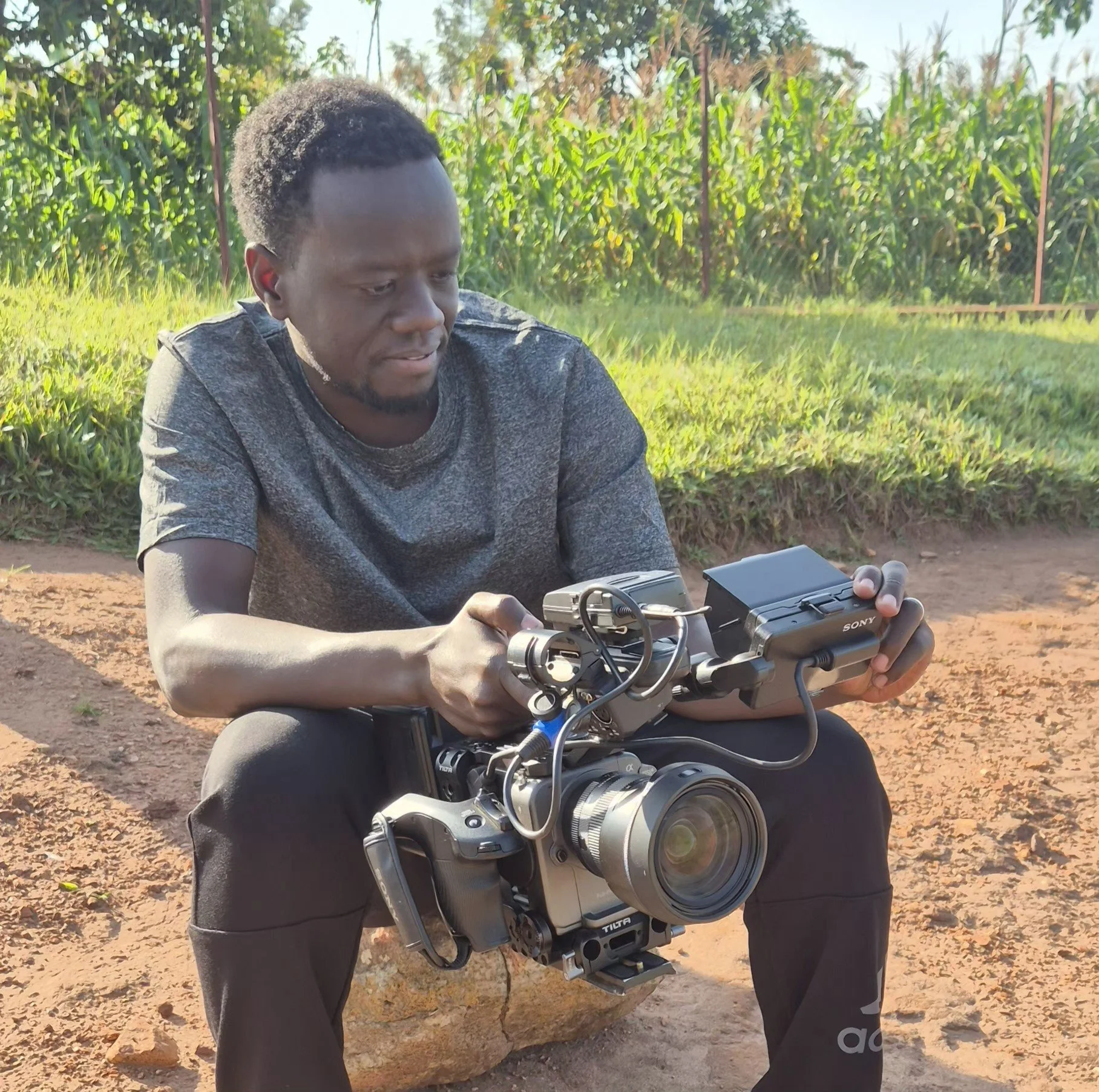
Author Patrick Sando
I am Patrick Sando, a Monitoring, Evaluation, Research and Learning (MERL) professional, currently Senior Monitoring, Evaluation, and Learning Specialist at the Center for International Forestry Research and World Agroforestry (CIFOR-ICRAF) based in Nairobi, Kenya. I have practiced and championed Outcome Harvesting since 2015, as a trainer, evaluator, and someone who has adapted it in contexts well beyond its conventional application.
The Context: This blog reflects how we recently adapted OH to document impact stories in both film and print formats for a partnership across eight African countries. The partnership aims to benefit smallholder farmers and create opportunities for young people. The activity aimed to identify, document and film compelling impact stories as part of the project review process.
The challenge was methodological: how do you systematically surface the most credible, representative and emotionally resonant stories from a sprawling, multi-country programme, without losing rigour?
We adapted OH as a Story Identification Framework, specifically building on Strategic Review findings and tweaking the six-step OH process as the core framework for impact story identification. Here is how each step translated in practice:
Designing the harvest: We clarified the purpose upfront - to produce about eight high-quality impact stories meeting the standards of a Framework Rubric that had been developed by the Funder, with a strong gender-transformative lens.
Reviewing documentation: The team reviewed transcripts from the programme review, annual reports and bi-annual reports, surfacing over 135 potential outcomes (Impact story leads) across seven categories of change.
Engaging informants: We engaged programme participants as the primary social actors. This step answered the essential OH questions: Who experienced the change? What changed? Where? When? It moved us beyond outputs to lived outcomes, income growth, enterprise expansion, shifts in household decision-making, and community-level ripple effects that extended well beyond the individual participant.
Substantiation: This was the most challenging step. We substantiated stories by collecting community testimonies from relatives, neighbors, and local leaders who witnessed the ripple effects of participants' changes. This was especially powerful for gender-transformative stories, where community voices corroborated structural shifts such as women accessing land for the first time and reductions in gender-based tensions at household level. The distinction lies in social actors narrating their own stories, with supporting evidence captured on camera by the monitoring and evaluation, and the communications teams.
The analysis part, with AI as a harvest assistant: With over 135 story leads, manual ranking was difficult. Multiple iterations of AI (Copilot)-assisted both potential outcomes/story identification and analysis, combined with a five-criteria scoring rubric covering significance, ripple effects, emotional resonance, programme contribution, and evidence quality, helped narrow the list to 30 strong outcomes/ impact stories, then to the final seven for filming. AI did not provide all the answers, but it meaningfully accelerated the analysis.
OH and film to tell lived changes among program participants: Perhaps the most novel aspect was that OH informed not just what stories to feature, but the key participants to be filmed (the social actors) and the story content. Interview guides were structured around contribution pathways and change journeys, ensuring filmed testimonies captured the who, what, when, where, and so what, giving the final videos both narrative depth and evidentiary credibility.
I look forward to further discussion during the Arusha, Tanzania OH exchange: Can OH's substantiation step be made more robust when social actors tell their own stories on camera? How do we balance the richness of individual stories with broad representativeness? I would welcome reflections from others in this community who have navigated similar terrain.
The real harvest, after all, lies in our collective learning.