
When is an outcome credible enough?

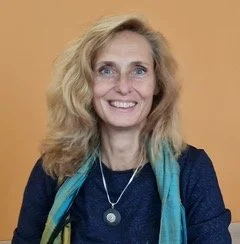
Dr. Kornelia (Konny) Rassmann is an independent PME consultant located in Germany with 20+ years’ experience supporting non-profit and for-profit organisations through complex change. Her OM/OH journey began in 2009 through work with pioneers in the field. Since then, she has been hooked on participatory, actor- and learning-oriented approaches, complemented by her training in agile work to help teams learn and adapt as they go. Since 2022, her focus has been on developing responsible and compliant AI-supported tools that make OH more accessible and efficient while preserving its human core: engaging people, understanding relationships, holding trust, reading context, and co-creating meaning amid uncertainty.
Gloria Kantengwa Over the past 8 years, Gloria has been working as a Planning, Monitoring, Evaluation, and Learning Professional. Currently, she works with the World Resource Institute. Prior to joining World Resource Institute, she worked as a Monitoring, Evaluation, Learning, and Research Associate for the Challenges Group-Rwanda, where she was responsible for evaluating projects aimed at improving livelihoods in the country. Gloria also worked as a Monitoring and Evaluation Specialist for Partners in Health-Rwanda and as a Research Consultant for the Plateforme des Autorités Locales des Pays des Grands Lacs. Gloria's expertise lies in carrying out evaluations for projects that aim to improve livelihoods, promote climate justice, and enhance systems improvement. Her work has been instrumental in helping organizations understand the effectiveness of their interventions and make evidence-based decisions.
Reflections on substantiation from the OH Practitioners Exchange in Arusha, Tanzania, July 2026
If there was one session at the first-ever Outcome Harvesting (OH) Practitioners Exchange guaranteed to spark debate, it was the one on substantiation. Step 4 of OH is the step practitioners most often adapt, postpone, or quietly skip. On Day 1 of the exchange meeting, a room full of harvesters finally compared notes on how we actually do it. Only a handful had used substantiation for evaluation; many had consciously decided not to substantiate. The gap between the book and the field was clear.
Three approaches, one step The session was built around three real cases, each representing a different philosophy.
The formal approach: In a 2020 evaluation of a global AIDS programme, the donor worried that OH meant "the butcher quality-controlling its own meat." The response was to use structured methods: from 120+ outcomes, independent evaluators selected 30+ for substantiation using set criteria and asked three substantiators per outcome to agree, partially agree, or disagree with the outcome, its significance, and the contribution claim. Disagreement did not automatically remove an outcome; evaluators still made their own documented judgement. The polished table gave the evaluation credibility, but the real value lay in the conversations behind the responses.
The pragmatic approach: The Circular Food Systems for Rwanda Project gathered product certification data from government institutions, which showed that national quality services had improved to benefit enterprises. Rather than using external substantiators, the team returned directly to the same social actors, mainly companies, gaining certification through a focus group discussion to verify outcomes identified in earlier steps. This extended engagement with social actors after Step 3 meant substantiation came directly from those being reported on, not external reviewers. This pragmatic approach proves most valuable when direct engagement with social actors provides more credible verification than external review alone.
The organic approach: A third case integrated substantiation into Step 3 rather than treating Step 4 as a separate final exercise. Outcome Statements were iteratively shared with additional sources, where possible including independent ones, whose feedback was used to confirm, challenge, and amend the narrative in a co-creative process. Rigour came from tracking which documents and people had informed or reviewed which parts of the statement and tagging outcomes according to their level of substantiation. This helped build shared ownership of the outcome narratives while allowing gaps and disagreements to be resolved early and transparently.
What the room said Group work surfaced familiar experiences. Implementers harvesting their own outcomes bring bias, yet they often know the outcomes best. Substantiation demands time, resources, and buy-in that evaluations rarely allow for. Key informants who are both independent and knowledgeable are scarce, and independence itself is not binary since someone outside a programme may still be connected to it. Perhaps the sharpest tension: Outcome Harvesting runs on trust and objectivity and asking to verify outcomes can feel like withdrawing that trust. The best reframe offered was to present substantiation as building evidence with partners, not controlling them.
The questions we parked How do we decide which outcomes to substantiate, and what criteria should guide that choice? Who counts as an independent substantiator, and how many sources are enough? Can unsubstantiated outcomes that comply with OH’s SMART criteria still serve as evidence? When is substantiation enough, and whose voice should carry most weight?
No formula and that's the point The session closed with an honest insight: substantiation cannot follow one fixed method. It can be structured, pragmatic, or organic depending on use, context, feasibility, and risk. Whatever the approach, the process should be transparent enough that others can judge credibility for themselves.
focus has been on developing responsible and compliant AI-supported tools that make OH more accessible and efficient while preserving its human core: engaging people, understanding relationships, holding trust, reading context, and co-creating meaning amid uncertainty.